

November 10, 2025
Mental health may be defined as being as significant as physical health, and in the case of the United States, the stigma is one of the largest obstacles to treatment and recovery. According to the National Alliance on Mental Illness (NAMI), 1 in 5 adult Americans is affected by a mental illness annually, but fewer than half of them receive any treatment. It is not necessarily the cost or availability; the fear of being judged, misunderstood, or discriminated against is often the reason.
Mental illness stigma brings about silence, isolation, and shame. However, this can be broken down through open conversations, storytelling, and community education, which will enable Americans to alter this barrier. This guide explains the origin of the stigma, its effects, and how to break it.
What is Mental Health Stigma?
Stigma is the negative beliefs, attitudes, or discrimination that is accorded to mentally ill persons. It has a tendency to stereotype or label some complex medical conditions. The stigma of losing one parent to cancer manifests in a number of ways in the U.S.:
- Stigma in society- The attitudes of society, like people with mental illness are dangerous or weak.
- Self-stigma – Internalized sense of shame, guilt, or worthlessness.
- Structural stigma – Structural barriers, such as insurance parity or discrimination at work.
Stigma is not a mere perception issue; it develops actual treatment, employment, and recovery barriers.
Impact of Stigma
Stigma impacts every aspect of life for individuals living with mental illness:
| Area of Life | Effect of Stigma |
| Healthcare Access | Many avoid counseling, therapy, or medication due to fear of judgment. |
| Employment | Concerns about discrimination prevent people from seeking accommodations. |
| Relationships | Shame and misunderstanding often lead to isolation. |
| Self-Esteem | Feelings of guilt and hopelessness make recovery harder. |
| Recovery | Reduced adherence to treatment slows healing and progress. |
Why Does Stigma Still Exist?
Stigma exists in American society, even with increased awareness. Among the most important ones are:
- Misunderstanding of culture -A large number of people still perceive mental illness as a sign of personal weakness rather than a health problem.
- Stereotypes in the media- The movies and TV programs tend to depict a mentally ill person as a violent or mad person.
- Fear in the workplace– Employees are usually afraid of sharing difficulties due to the fear of losing their jobs or not being promoted.
- Generational beliefs – The elderly can consider mental illness to be a taboo.
- Low level of education- In most communities, there is no access to proper information on mental health.
These are the factors that contribute to silence and deny individuals the ability to seek help when required the most.
Key Insights on Stigma in the U.S.
Research shows how stigma continues to shape mental health care in the U.S.:
| Source / Year | Focus | Key Insight |
| NCS-R, 2005 | Access | Fewer than 41% of adults with mental illness received treatment. |
| Psychological Medicine, 2011 | Attitudes | Public stigma declined slightly, but self-stigma persisted. |
| JAMA Network, 2019 | Youth | Shame was a top reason college students avoided seeking help. |
| CDC, 2021 | COVID-19 | The pandemic encouraged more open discussions about mental health. |
| NAMI, 2022 | Workplace | 8 in 10 employees feared stigma would affect job security. |
These findings highlight the gap between awareness and actual support.
How to Break the Stigma
Stigmatizing should be a societal endeavor to break. It is a combination of individuals, communities, and institutions.
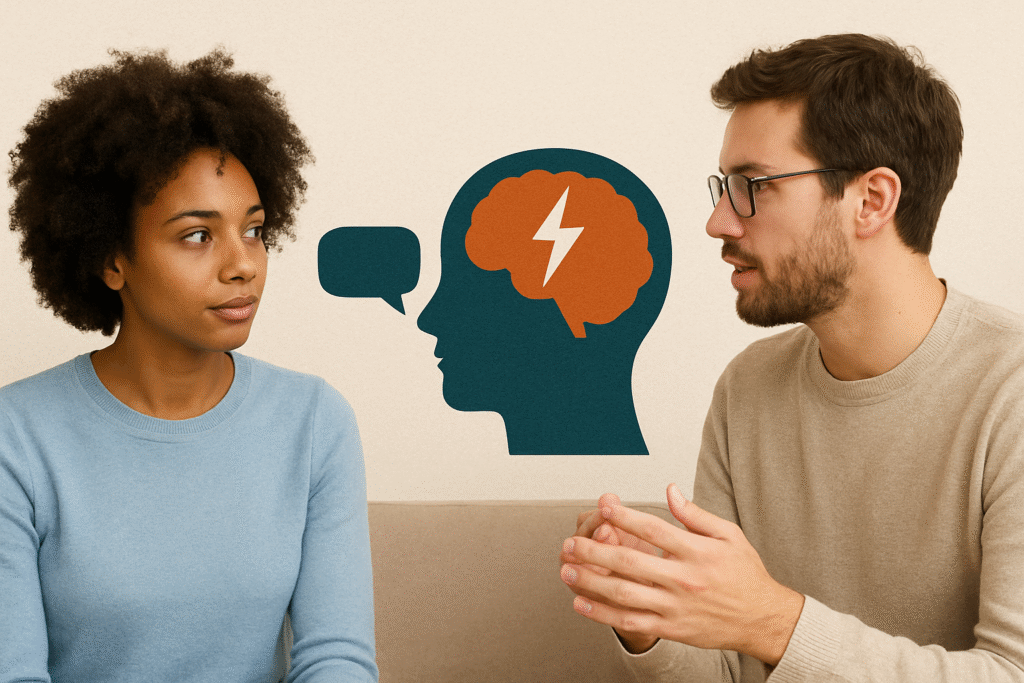
Encourage open conversations
Discussion of mental health makes it a normal aspect and decreases shame and confidentiality. Storytelling makes other people feel less singled out.
Educate communities
Workshops and some awareness campaigns can be held in schools, workplaces, and community centers. Facts dispel negative stereotypes.
Facilitate good images in the media.
Stereotypes can be discouraged by promoting realism in movies, television, and the news media.
Support peer networks
Circles that are led by peers, such as NAMI, offer hope, understanding, and compassion.
Advocate for policy changes
The workplace should be better safeguarded, there should be equal insurance cover, and more community services, so as to be fair.
Be sensitive to cultural differences.
Mental illness may be perceived differently by different communities. Culturally aware practices enhance treatment and minimise stigma.
The positive sides of Breaking the Stigma.
The power of reducing stigma impacts the community and individuals in a substantial manner:
- Access to better treatment – More individuals demand therapy, counseling, and medication.
- Better workplace inclusion- The employees will be able to flourish with the needed accommodations.
- Both relationships become stronger – Families and friends become understanding and empathetic.
- Improved recovery rates -Individuals will experience higher success rates of remaining in the treatment and achieving recovery goals.
- Healthier communities- Healthy communities come to light through open dialogue.
Conclusion
Stigma is among the most enduring challenges that prevents Americans from getting the mental health care they deserve. Societies can assist in the fact that nobody suffers silently by making communications normalized, fighting destructive stereotypes, and advocating for available care.
Alleviating the stigma is not simply a hand talk but creating a society where seeking help will be perceived as a show of prowess and not weakness. By working together, Americans can be capable of shifting into a mental health future that will accord mental health compassion, dignity, and openness